

Emergency Exit Lighting Installation Jacksonville: Code-Compliant Life-Safety Systems
Vanguard Electrical Contractors designs, installs, and maintains emergency exit lighting systems for commercial and institutional facilities throughout Jacksonville, FL. Our systems meet Florida Building Code Chapter 10 egress requirements and NFPA 101 life-safety standards, ensuring reliable illumination during power outages and emergencies.
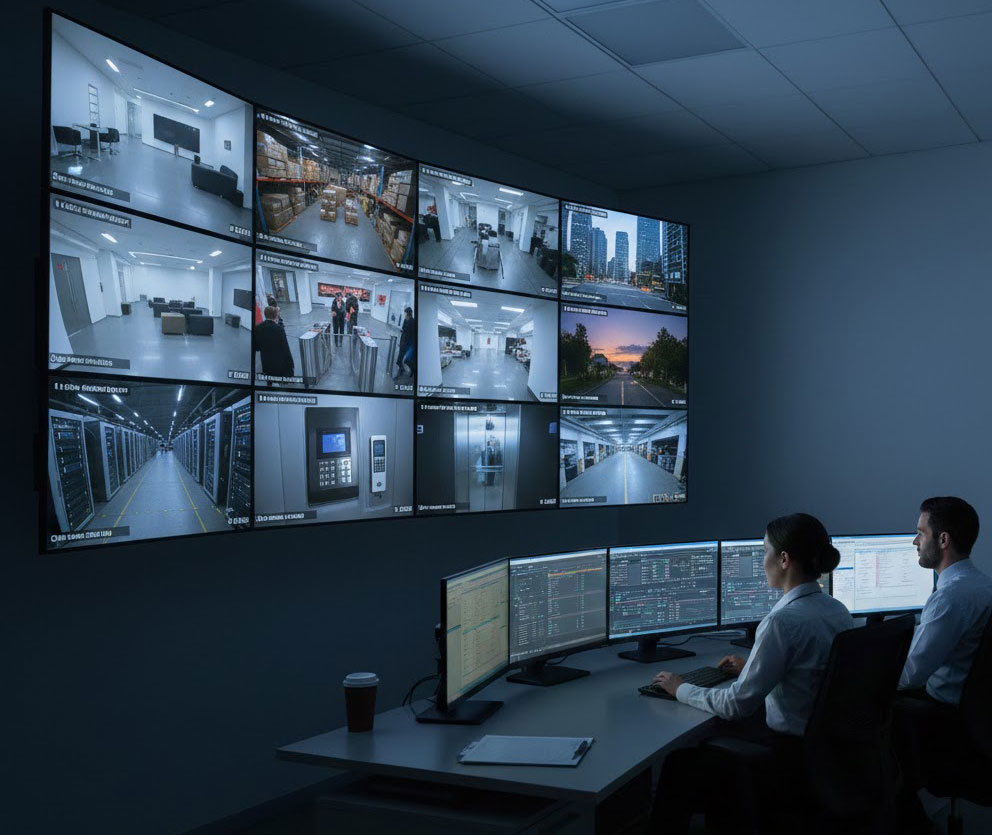
Vanguard Electrical Contractors provides emergency exit lighting installation for commercial facilities, government buildings, and institutional campuses in Jacksonville — delivering code-compliant egress lighting systems that meet Florida Building Code and NFPA 101 life-safety requirements.
Written by The Vanguard Team — Licensed Commercial Electrical Contractors, Jacksonville, FL | Florida License EC13013821. Serving Jacksonville since 2007, led by Master Electrician Carey Frick, PMP Certified.
What Are the Florida Building Code Requirements for Emergency Exit Lighting?
Florida Building Code Chapter 10 mandates that all commercial occupancies maintain minimum 1.0 foot-candle illumination along designated egress paths and at exit doors during emergencies.[1] Emergency lighting systems must activate automatically within 10 seconds of utility power loss and provide at least 90 minutes of continuous illumination to allow safe building evacuation.
The code requires exit signs to be illuminated continuously or activate instantly during power interruptions, with internally illuminated signs maintaining minimum 5 foot-candle surface luminance.[2] NFPA 101 Life Safety Code further specifies that emergency lighting must illuminate stairs, ramps, corridors, and passageways at transitions in floor level where changes in direction occur.[3] Our Jacksonville installations comply with both state and federal standards, verified through commissioning tests that document light levels, battery runtime, and automatic transfer switching.
How Do Emergency Exit Lighting Systems Work?
Emergency exit lighting systems use battery-backed inverters or self-contained fixtures that switch to battery power within seconds when AC utility power fails. Central inverter systems power multiple LED fixtures from a shared battery bank and automatic transfer switch, while unit equipment combines LED lamps, battery packs, and charging circuits in individual housings mounted above exit doors or along egress routes.
Modern LED emergency fixtures consume 80-90% less energy than legacy incandescent units while delivering equivalent lumen output, reducing battery capacity requirements and extending backup runtime.[4] Lithium-ion battery technology now provides 10-year service life compared to 4-5 years for sealed lead-acid batteries, lowering total cost of ownership for institutional facilities with hundreds of emergency lights. Networked emergency lighting systems integrate with building management platforms to provide real-time monitoring, automated self-testing, and predictive maintenance alerts across multi-building campuses.
What Types of Facilities Need Emergency Exit Lighting in Jacksonville?
Florida Building Code requires emergency exit lighting in all commercial occupancies including office buildings, retail stores, warehouses, manufacturing facilities, healthcare institutions, educational campuses, and government buildings.[1] Assembly occupancies such as theaters, restaurants, and conference centers face enhanced requirements due to high occupant loads and unfamiliar egress paths for visitors.
| Occupancy Type | Egress Lighting Requirement | Typical System |
|---|---|---|
| Office / Business | 1.0 fc along paths, 90 min backup | Central inverter + LED fixtures |
| Retail / Mercantile | 1.0 fc corridors, 0.2 fc sales floor | Unit equipment + exit signs |
| Healthcare / Institutional | Continuous illumination, 2-hour backup | Networked central system |
| Industrial / Warehouse | 1.0 fc aisles, stairways, exits | High-bay LED emergency fixtures |
| Assembly / Theater | 0.2 fc floor level, lighted exit signs | Low-level pathway lighting |
High-rise buildings over 75 feet require emergency power systems that support egress lighting, fire alarm, and smoke control for the duration of building evacuation, often necessitating generator-backed solutions rather than battery-only systems.[5]
How Often Must Emergency Lighting Systems Be Tested?
NFPA 101 Section 7.9.3 mandates monthly 30-second functional tests and annual 90-minute full-discharge tests for all emergency lighting equipment.[3] Monthly tests verify that lamps illuminate and batteries hold sufficient charge for immediate activation, while annual tests confirm that battery capacity supports code-required 90-minute runtime under full load.
Our maintenance programs document all test results in compliance logs required during fire marshal inspections and insurance audits. Self-testing emergency lighting systems automate monthly and annual test cycles, storing results in onboard memory accessible via control panels or BACnet/Modbus building automation interfaces. Facilities with self-testing systems reduce labor costs by 75% compared to manual lamp checks while improving compliance documentation.[6]
Need a code-compliant emergency lighting installation or testing service? Call Vanguard Electrical Contractors at (904) 232-4018 or request a free estimate at vanguardelectricalcontractors.com/contact-us/.
What Are Common Emergency Exit Lighting Failures?
Battery degradation causes 60-70% of emergency lighting failures, with sealed lead-acid batteries losing capacity after 3-4 years of service in hot climates like Jacksonville.[7] Inadequate maintenance intervals allow batteries to reach end-of-life without replacement, leaving systems unable to provide required 90-minute backup during actual power outages.
Lamp burnout in older incandescent and compact fluorescent emergency fixtures creates non-compliant dark spots along egress paths, while corroded wire connections in unit equipment mounted in humid environments cause intermittent operation. Inverter charger failures in central battery systems prevent batteries from maintaining float charge, resulting in depleted reserves when utility power fails. Modern LED technology eliminates lamp replacement for 10-15 years, while lithium battery chemistry tolerates temperature extremes and deep discharge cycles better than legacy lead-acid designs.[4]
Frequently Asked Questions
Can I use battery backup LED exit signs instead of hardwired emergency lights?
Self-contained battery backup exit signs meet code requirements for marking exits but do not provide required egress path illumination. Florida Building Code mandates separate emergency lighting fixtures to maintain 1.0 foot-candle levels along corridors, stairways, and exit access routes. Most commercial installations require both illuminated exit signs and emergency lighting fixtures.
Do outdoor egress paths need emergency lighting?
Yes, NFPA 101 requires emergency lighting for exterior exit discharge areas extending 10 feet from building exits and along exterior egress routes to public ways. Weatherproof LED emergency fixtures rated for wet locations provide code-compliant illumination for parking lot pathways, loading docks, and exterior stairways used as means of egress.
How long does emergency exit lighting installation take?
Typical commercial installations require 2-5 days depending on facility size and system complexity. Unit equipment retrofits in existing buildings with accessible ceilings complete faster than central inverter systems requiring new battery rooms and branch circuit wiring. We schedule installations during off-hours to minimize business disruption.
What is the cost difference between central inverter and unit equipment systems?
Central inverter systems have higher upfront costs due to battery infrastructure and transfer switching but lower per-fixture expenses and simplified maintenance. Unit equipment costs less initially but requires individual battery replacements every 4-10 years. For facilities with 50+ emergency lights, centralized systems typically offer better lifecycle economics.
Ensure your Jacksonville facility meets Florida Building Code emergency lighting requirements with professionally designed and installed egress lighting systems. Call Vanguard Electrical Contractors at (904) 232-4018 or visit vanguardelectricalcontractors.com/contact-us/ for a comprehensive site assessment and compliance review.
Written by The Vanguard Team — Licensed Commercial Electrical Contractors, Jacksonville, FL | Florida License EC13013821. Updated January 2026.
References
- Florida Building Code, 8th Edition (2023), Chapter 10: Means of Egress. https://codes.iccsafe.org/content/FBC2023P1
- International Building Code (IBC) 2021, Section 1013: Exit Signs. https://codes.iccsafe.org/content/IBC2021P3
- NFPA 101: Life Safety Code, 2021 Edition, Section 7.9: Emergency Lighting. https://www.nfpa.org/codes-and-standards/all-codes-and-standards/list-of-codes-and-standards/detail?code=101
- U.S. Department of Energy, LED Lighting for Emergency and Exit Applications (2022). https://www.energy.gov/eere/buildings/led-lighting
- Florida Building Code, Section 403: High-Rise Buildings Emergency Power Requirements. https://codes.iccsafe.org/content/FBC2023P1/chapter-4-special-detailed-requirements-based-on-use-and-occupancy
- Illuminating Engineering Society (IES), RP-29-20: Lighting for Hospitals and Health Care Facilities. https://www.ies.org/standards/
- National Fire Protection Association, Emergency Lighting System Reliability Study (2020). https://www.nfpa.org/research