

Fire Pump Electrical Systems in Jacksonville FL
Vanguard Electrical Contractors designs, installs, and maintains fire pump controllers, emergency power systems, and life safety electrical infrastructure for commercial, institutional, and government facilities throughout Jacksonville and Northeast Florida. Our NFPA-compliant installations ensure mission-critical fire protection systems operate reliably during emergencies.
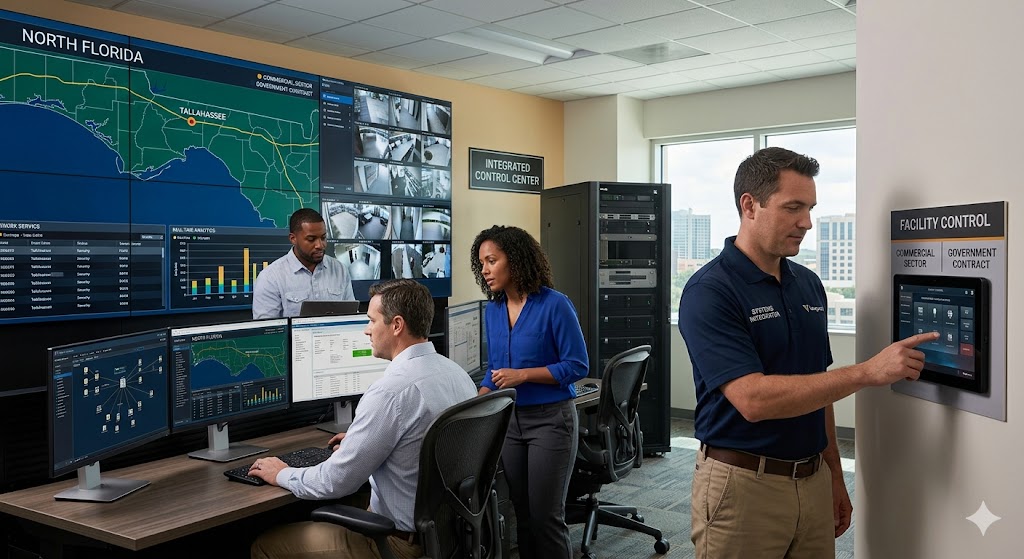
Vanguard Electrical Contractors provides fire pump electrical systems and life safety power solutions for commercial and institutional facilities in Jacksonville, Duval, St. Johns, Clay, and Nassau counties — delivering code-compliant installations that protect lives and property during critical fire events.
Written by The Vanguard Team — Licensed Commercial Electrical Contractors, Jacksonville, FL. Florida License EC13013821. Serving Jacksonville since 2007 under the leadership of Master Electrician Carey Frick, PMP Certified.
What Are Fire Pump Electrical Systems?
Fire pump electrical systems provide dedicated power and control infrastructure for fire pumps that boost water pressure in standpipe and sprinkler systems when municipal supply is insufficient. These systems include fire pump controllers, transfer switches, emergency generators, backup power sources, and supervision circuits that meet NFPA 20 and NFPA 70 (National Electrical Code) requirements.[1]
Commercial buildings, high-rises, warehouses, hospitals, universities, and manufacturing facilities typically require fire pumps when static water pressure falls below the design demand of the sprinkler system. The electrical infrastructure supporting these pumps must operate flawlessly during emergencies — power failures, utility outages, and fire conditions — which demands specialized design, installation, and testing protocols distinct from standard electrical work.[2]
Vanguard Electrical’s commercial electrical team has installed fire pump systems across Jacksonville’s institutional and government sectors, ensuring compliance with Florida Building Code Chapter 9 and local Authority Having Jurisdiction (AHJ) requirements specific to Duval, St. Johns, Clay, and Nassau counties.
How Do Fire Pump Controllers Work?
Fire pump controllers automate pump startup based on pressure-sensing signals, provide overcurrent protection, and monitor system status through supervisory circuits that alert building management systems when faults occur. Controllers must be listed to UL 218 standards and installed in NFPA 20-compliant configurations that include disconnect means, isolating switches, and visual/audible alarm indicators.[3]
Modern fire pump controllers integrate with building automation systems (BAS) and fire alarm control panels (FACP) to provide real-time status monitoring. When sprinkler system pressure drops below the controller’s setpoint — typically due to water flow from open sprinkler heads — the controller energizes the pump motor. The system continues operating until pressure is restored or manual shutdown occurs at the controller or remote annunciator panel.
Controllers for electric motor-driven pumps include reduced-voltage starting methods (across-the-line, reduced-current soft start, or autotransformer) sized to handle the inrush current of large motors, commonly ranging from 50 to 500 horsepower in commercial applications. Diesel engine-driven pumps use battery-powered controllers with engine-starting circuits and run-time monitoring.[4]
What Are Life Safety Power Requirements?
Life safety power systems supply emergency and legally required standby loads including fire pumps, fire alarm systems, emergency lighting, exit signs, smoke control equipment, and elevator recall circuits. NFPA 70 Article 700 and Article 701 mandate separate service disconnects, transfer switches rated for emergency duty, and independent overcurrent protection for these critical loads.[5]
Fire pump electrical installations require dedicated service from the utility or a dedicated feeder ahead of the main service disconnect, ensuring the fire pump remains energized even if the building’s main breaker trips. This “tap ahead of main” configuration is explicitly permitted under NEC 695.3 and must include disconnecting means and overcurrent protection sized per NEC 695.4 and 695.5.[1]
| System Component | NFPA Standard | Key Requirement |
|---|---|---|
| Fire Pump Controller | NFPA 20 | UL 218 listed, dedicated circuit, supervisory monitoring |
| Normal Power Source | NEC 695.3 | Utility service or dedicated feeder ahead of main disconnect |
| Emergency Power (Generator) | NFPA 110 / NEC 700 | Level 1 system, 10-second transfer, 4-hour fuel minimum |
| Transfer Switch | NEC 695.4(B) | Automatic, listed for fire pump service, bypass-isolation type |
| Disconnecting Means | NEC 695.4(B) | Lockable in closed position, visible from controller |
Jacksonville-area facilities subject to Florida Building Code amendments and local AHJ interpretations often require enhanced redundancy. Vanguard Electrical coordinates with fire marshals, plan reviewers, and commissioning agents to ensure installations meet or exceed all applicable codes during design, rough-in inspection, and final acceptance testing phases.
Why Choose Vanguard Electrical for Fire Pump Systems?
Vanguard Electrical Contractors holds Florida Electrical Contractor License EC13013821 and brings nearly two decades of commercial project experience to life safety electrical installations across Jacksonville’s institutional, government, and industrial sectors. Our team understands the coordination required between electrical contractors, fire protection engineers, mechanical contractors, and commissioning authorities to deliver compliant, reliable fire pump systems.
We provide turnkey fire pump electrical services including load calculations, short-circuit coordination studies, one-line diagram development, controller and transfer switch procurement, rough-in and trim installation, system startup and witnessing, and AHJ acceptance testing. Our project management approach — led by PMP-certified professionals — ensures schedule adherence and seamless integration with general contractors and construction managers on complex commercial builds and renovations.[6]
From NAS Jacksonville projects requiring DoD Unified Facilities Criteria (UFC) compliance to hospital expansions governed by CMS Life Safety Code standards, Vanguard delivers the technical depth and regulatory fluency that mission-critical facilities demand. Our existing relationships with local inspectors and fire officials in Duval, St. Johns, Clay, and Nassau counties streamline permitting and inspection processes, reducing project risk and timeline uncertainty.
Need fire pump electrical design, installation, or emergency service in Jacksonville? Call Vanguard Electrical Contractors at (904) 232-4018 or request a free estimate at vanguardelectricalcontractors.com/contact-us/ to discuss your life safety power requirements.
Frequently Asked Questions
Do fire pumps require backup power?
NFPA 20 requires an alternate power source for electric motor-driven fire pumps when reliable utility service cannot be demonstrated. Acceptable sources include an on-site emergency generator meeting NFPA 110 Level 1 requirements, a second utility service from a separate substation, or a dedicated transformer. Diesel-engine-driven pumps with onboard fuel tanks serve as their own backup and do not require a generator.
How often must fire pump systems be tested?
NFPA 25 mandates weekly churn tests (no-flow operation), annual full-flow performance tests at rated conditions, and monthly controller/power supply inspections. The annual test measures flow, pressure, suction, and power consumption to verify pump performance against original acceptance criteria. Documentation of all tests must be maintained and made available to the AHJ during inspections.
Can a fire pump share a generator with other loads?
Fire pumps may share emergency generators with other legally required standby or optional standby loads, provided the generator has sufficient capacity, the fire pump is connected ahead of other loads via automatic load shedding, and transfer occurs within 10 seconds per NFPA 20. The generator and transfer switch must be sized to handle the fire pump motor locked-rotor current without excessive voltage drop that would prevent motor starting.
What is the typical installation timeline for fire pump electrical?
Electrical rough-in for fire pump systems typically requires 3–7 days depending on service configuration, conduit runs, and coordination with fire protection contractors installing pumps and piping. Controller installation, terminations, and startup testing add another 2–4 days. Total schedule depends on equipment lead times (8–16 weeks for controllers and transfer switches), permitting duration, and coordination with other trades during new construction or retrofit projects.
Ensure your commercial facility’s fire pump electrical systems meet NFPA 20, NEC Article 695, and Florida Building Code requirements. Vanguard Electrical Contractors delivers code-compliant installations backed by Florida EC License EC13013821 and nearly two decades of Jacksonville-area project experience. Call (904) 232-4018 or visit vanguardelectricalcontractors.com/contact-us/ for a consultation.
Written by The Vanguard Team — Licensed Commercial Electrical Contractors, Jacksonville, FL. Updated January 2026.
References
- National Fire Protection Association. NFPA 20: Standard for the Installation of Stationary Pumps for Fire Protection. https://www.nfpa.org/codes-and-standards/all-codes-and-standards/list-of-codes-and-standards/detail?code=20
- International Code Council. Florida Building Code, Chapter 9: Fire Protection and Life Safety Systems. https://www.floridabuilding.org/
- Underwriters Laboratories. UL 218: Standard for Fire Pump Controllers. https://www.ul.com/resources/standards
- National Fire Protection Association. NFPA 70: National Electrical Code, Article 695 — Fire Pumps. https://www.nfpa.org/codes-and-standards/all-codes-and-standards/list-of-codes-and-standards/detail?code=70
- National Fire Protection Association. NFPA 70: National Electrical Code, Article 700 — Emergency Systems. https://www.nfpa.org/codes-and-standards/all-codes-and-standards/list-of-codes-and-standards/detail?code=70
- National Fire Protection Association. NFPA 110: Standard for Emergency and Standby Power Systems. https://www.nfpa.org/codes-and-standards/all-codes-and-standards/list-of-codes-and-standards/detail?code=110
- National Fire Protection Association. NFPA 25: Standard for the Inspection, Testing, and Maintenance of Water-Based Fire Protection Systems. https://www.nfpa.org/codes-and-standards/all-codes-and-standards/list-of-codes-and-standards/detail?code=25