

Hi-Pot Testing Jacksonville: NETA-Compliant Electrical Cable Diagnostics
Vanguard Electrical Contractors delivers commercial hi-pot testing and insulation resistance testing for Jacksonville facilities, meeting IEEE and NETA standards for acceptance testing, commissioning, and preventive maintenance. Our diagnostics identify insulation breakdown before catastrophic failures occur in medium-voltage systems.
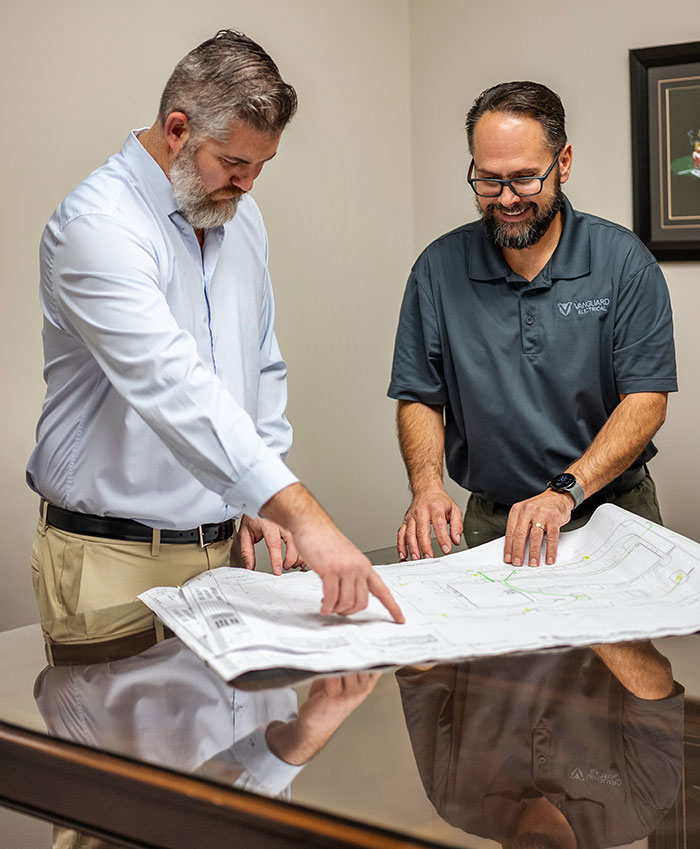
Vanguard Electrical Contractors provides hi-pot testing and insulation resistance testing for commercial, institutional, and government facilities in Jacksonville, FL — ensuring electrical systems meet industry standards for safety, reliability, and regulatory compliance.
Written by The Vanguard Team — Licensed Commercial Electrical Contractors, Jacksonville, FL | Florida License EC13013821 | Serving Jacksonville Since 2007 | Led by Master Electrician Carey Frick, PMP Certified.
What Is Hi-Pot Testing and Why Is It Required?
Hi-pot (high-potential) testing applies voltage substantially higher than the system’s rated voltage to verify insulation integrity and detect manufacturing defects, installation errors, or aging degradation. The test stresses the insulation system to confirm it can withstand transient overvoltages during service without breakdown.[1]
IEEE Standard 400-2012 and NETA ATS-2021 mandate hi-pot testing as part of acceptance testing for new cable installations, after major repairs, and during commissioning of medium-voltage systems (2.4 kV through 35 kV).[2] Facilities that skip acceptance testing face undetected installation defects, premature failures, and potential OSHA violations when arc flash incidents result from compromised insulation.
Jacksonville commercial property managers, facility engineers, and consulting engineers rely on hi-pot testing to validate new electrical infrastructure, qualify cable after pulling, and confirm system readiness before energization. The test identifies contamination, voids, moisture intrusion, and mechanical damage invisible to visual inspection.
How Does Insulation Resistance Testing Differ from Hi-Pot Testing?
Insulation resistance (IR) testing applies lower DC voltage (typically 500 V to 5,000 V) to measure the resistance of cable insulation and detect moisture, contamination, or deterioration without the high stress of hi-pot testing. IR testing is non-destructive and suitable for routine preventive maintenance, trending analysis, and troubleshooting.
The two methods complement each other: insulation resistance testing screens for gross defects and establishes baseline values, while hi-pot testing confirms the insulation can withstand operating stresses and transient overvoltages.[3] NETA MTS-2019 recommends annual insulation resistance testing for critical medium-voltage equipment and three-to-five-year intervals for hi-pot testing based on system criticality and environmental conditions.[4]
| Test Parameter | Insulation Resistance | Hi-Pot (Proof Test) |
|---|---|---|
| Applied Voltage | 500 V – 5,000 V DC | 2× to 2.5× rated voltage |
| Test Duration | 1 minute (spot test) | 5 – 15 minutes |
| Primary Use | Trending, maintenance | Acceptance, commissioning |
| Stress Level | Low (non-destructive) | High (qualification test) |
| Standards | IEEE 43-2013 | IEEE 400.2-2013 |
What Equipment and Procedures Do Commercial Hi-Pot Tests Require?
Commercial hi-pot testing requires specialized DC hipot test sets rated for the system voltage class, with output ranges from 5 kV to 100 kV and current-limiting circuitry to prevent insulation damage during fault detection. Modern digital hipot sets log voltage, leakage current, and time data for compliance documentation and trending analysis.[5]
NETA-qualified technicians follow IEEE 400.2-2013 for shielded power cable testing: the cable is isolated, grounded at both ends, and the test voltage is ramped at no more than 500 V/s to the target level (typically 80% of factory test voltage for acceptance testing). Leakage current is monitored continuously; a rapid increase indicates insulation breakdown. Test duration follows manufacturer specifications, typically 5 minutes for distribution cable and 15 minutes for critical feeders.[6]
Jacksonville facilities testing medium-voltage switchgear, transformers, or cable systems must coordinate with the authority having jurisdiction (AHJ) and document results per NFPA 70B-2023 maintenance standards. Vanguard Electrical maintains calibrated Megger and Phenix Technologies test equipment traceable to NIST standards, ensuring measurements meet Florida Building Code and utility interconnection requirements.
When Should Jacksonville Facilities Schedule Hi-Pot and Insulation Testing?
Schedule hi-pot testing immediately after new cable installation, following any cable splice or termination work, and before initial energization of medium-voltage systems — acceptance testing is mandatory per IEEE and NETA standards. Routine insulation resistance testing should occur annually for critical systems and every three years for general distribution equipment.[7]
Commercial properties in Jacksonville’s coastal climate face accelerated insulation degradation from humidity, salt air, and thermal cycling. Industrial facilities with VFD-driven equipment experience elevated stress on cable insulation due to high-frequency voltage transients. Data centers, healthcare facilities, and mission-critical operations benefit from biannual insulation resistance testing to catch deterioration before unplanned outages occur.
Emergency hi-pot testing is warranted after flood events, ground faults, or unexplained breaker trips. If insulation resistance values have declined more than 25% from baseline, a hi-pot test confirms whether the system can continue operating safely or requires cable replacement.
Call Vanguard Electrical Contractors at (904) 232-4018 or request a free estimate at vanguardelectricalcontractors.com/contact-us/ to schedule commercial hi-pot testing and insulation diagnostics in Jacksonville, FL.
What Do Hi-Pot Test Results Indicate About System Health?
Hi-pot test results reveal insulation integrity through leakage current measurements: stable low-level current indicates healthy insulation, while rising current or sudden failure signals defects requiring immediate attention before energization. Passing criteria are defined by IEEE 400-2012 and cable manufacturer specifications, typically requiring leakage current below 1 mA for distribution cables.[8]
A failed hi-pot test does not always mandate cable replacement. Localized defects in terminations, splices, or jacket damage may be repairable. Vanguard technicians perform fault locating using time-domain reflectometry (TDR) to pinpoint the failure location, enabling targeted repairs rather than complete re-pulls. Post-repair re-testing confirms the corrective action restored insulation integrity.
Jacksonville facility managers receive detailed test reports documenting applied voltage, test duration, leakage current profiles, ambient conditions, and pass/fail determinations. These records satisfy insurance underwriters, meet OSHA electrical safety standards, and provide defensible documentation for arc flash risk assessments and NFPA 70E compliance audits.
What is the difference between AC and DC hi-pot testing?
DC hi-pot testing is preferred for cable acceptance testing because it does not charge the cable capacitance, allowing higher test voltages with portable equipment and reducing the risk of insulation damage. AC hipot testing applies voltage closer to service conditions but requires larger, less portable equipment and introduces capacitive charging current that can mask insulation defects.
How often should commercial facilities perform insulation resistance testing?
NETA MTS-2019 recommends annual insulation resistance testing for mission-critical medium-voltage equipment and three-year intervals for general distribution systems. High-humidity environments, coastal locations, and facilities with frequent thermal cycling benefit from more frequent testing to detect moisture ingress and aging trends.
Can hi-pot testing damage good insulation?
Properly conducted hi-pot testing per IEEE 400.2-2013 does not damage healthy insulation. Test voltages are carefully selected (typically 60-80% of factory test levels for acceptance testing), ramp rates are controlled, and duration limits prevent cumulative stress. Defective or aged insulation that fails a hi-pot test would have failed prematurely in service.
What voltage levels require hi-pot testing in Jacksonville facilities?
IEEE and NETA standards mandate hi-pot testing for medium-voltage systems (2.4 kV through 35 kV) as part of acceptance testing and commissioning. Low-voltage systems (600 V and below) typically use insulation resistance testing only, though critical data center and healthcare installations may specify hi-pot testing for added assurance.
Ensure your Jacksonville facility’s electrical infrastructure meets industry standards and operates safely. Call Vanguard Electrical Contractors at (904) 232-4018 or visit vanguardelectricalcontractors.com/contact-us/ to schedule NETA-compliant hi-pot testing and insulation diagnostics today.
Written by The Vanguard Team — Licensed Commercial Electrical Contractors, Jacksonville, FL | Florida License EC13013821. Updated January 2026.
References
- IEEE Standards Association. IEEE Std 400-2012: Guide for Field Testing and Evaluation of the Insulation of Shielded Power Cable Systems Rated 5 kV and Above. https://standards.ieee.org/standard/400-2012.html
- InterNational Electrical Testing Association. ANSI/NETA ATS-2021: Standard for Acceptance Testing Specifications for Electrical Power Equipment and Systems. https://www.netaworld.org/standards/ansi-neta-ats
- IEEE Standards Association. IEEE Std 43-2013: Recommended Practice for Testing Insulation Resistance of Rotating Machinery. https://standards.ieee.org/standard/43-2013.html
- InterNational Electrical Testing Association. ANSI/NETA MTS-2019: Standard for Maintenance Testing Specifications for Electrical Power Equipment and Systems. https://www.netaworld.org/standards/ansi-neta-mts
- IEEE Standards Association. IEEE Std 400.2-2013: Guide for Field Testing of Shielded Power Cable Systems Using Very Low Frequency (VLF). https://standards.ieee.org/standard/400_2-2013.html
- National Fire Protection Association. NFPA 70B-2023: Recommended Practice for Electrical Equipment Maintenance. https://www.nfpa.org/codes-and-standards/all-codes-and-standards/list-of-codes-and-standards/detail?code=70B
- Occupational Safety and Health Administration. 29 CFR 1910.269: Electric Power Generation, Transmission, and Distribution. https://www.osha.gov/laws-regs/regulations/standardnumber/1910/1910.269
- National Electrical Manufacturers Association. NEMA Standards Publication WC 74-2019: 5-46 kV Shielded Power Cable for Transmission and Distribution. https://www.nema.org/standards/view/5-46-kv-shielded-power-cable-for-transmission-and-distribution